
lgf.design

Case Study — UX/UI Design

Audible Book
Clubs

Adding a new feature to enhance the user's social experience.

UX Research Interaction Design
Scroll
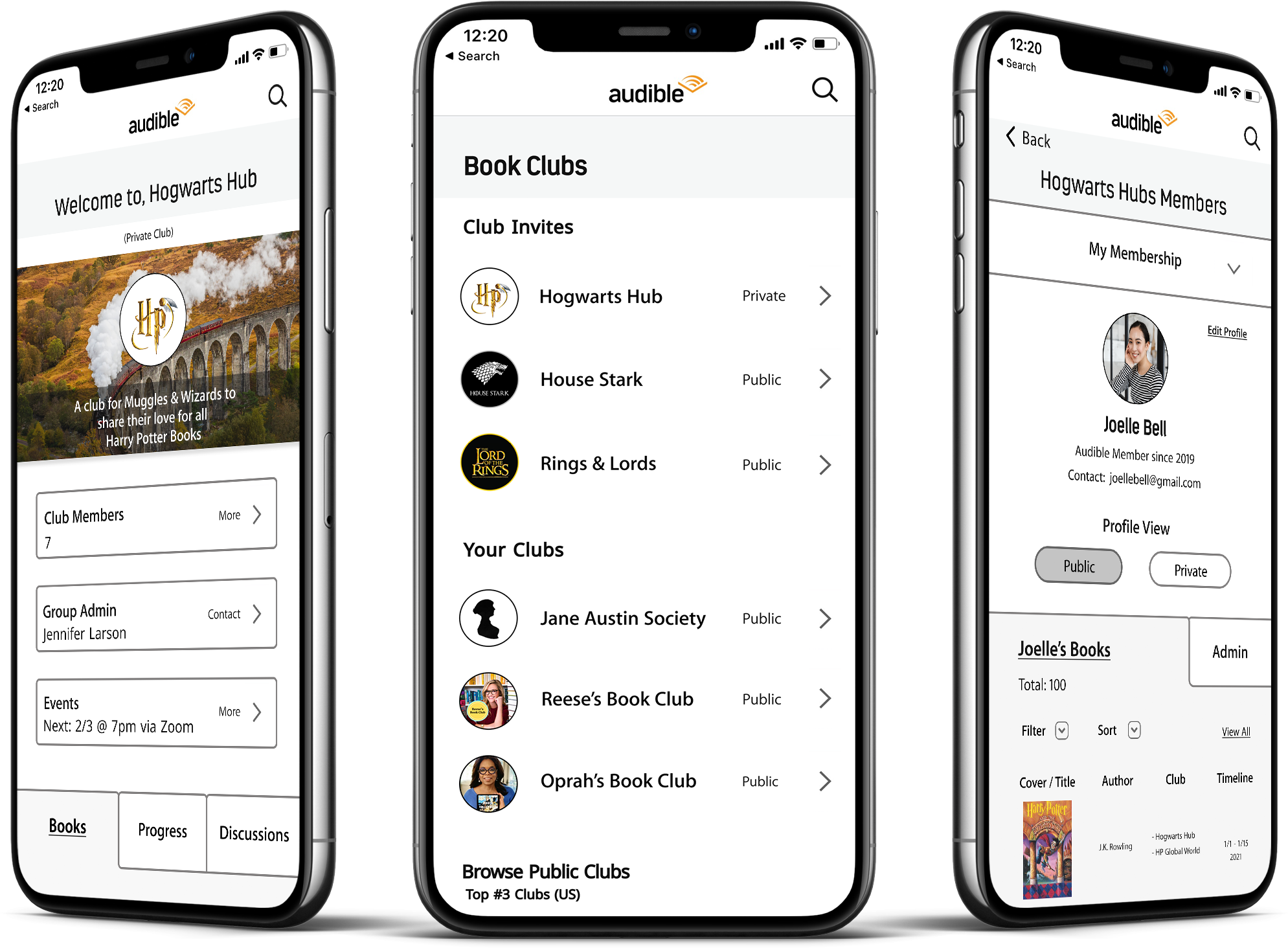
Audible Book Clubs new feature mockup on iPhone

Project Overview

9
User Interviews
6
Usability Testers

A Social Layer for Audible

Background

While Audible is well-established and widely used, most users feel it still has significant room for improvement, especially when it comes to sharing their favorite books with fellow listeners.

The goal was to create a "Book Clubs" feature that promotes social engagement by allowing friends to connect and discuss their books of choice, expanding the listening experience without turning Audible into a social media app.

As the sole UX/UI designer on this concept project, I conducted research, user interviews, usability testing, and full visual design in Figma.
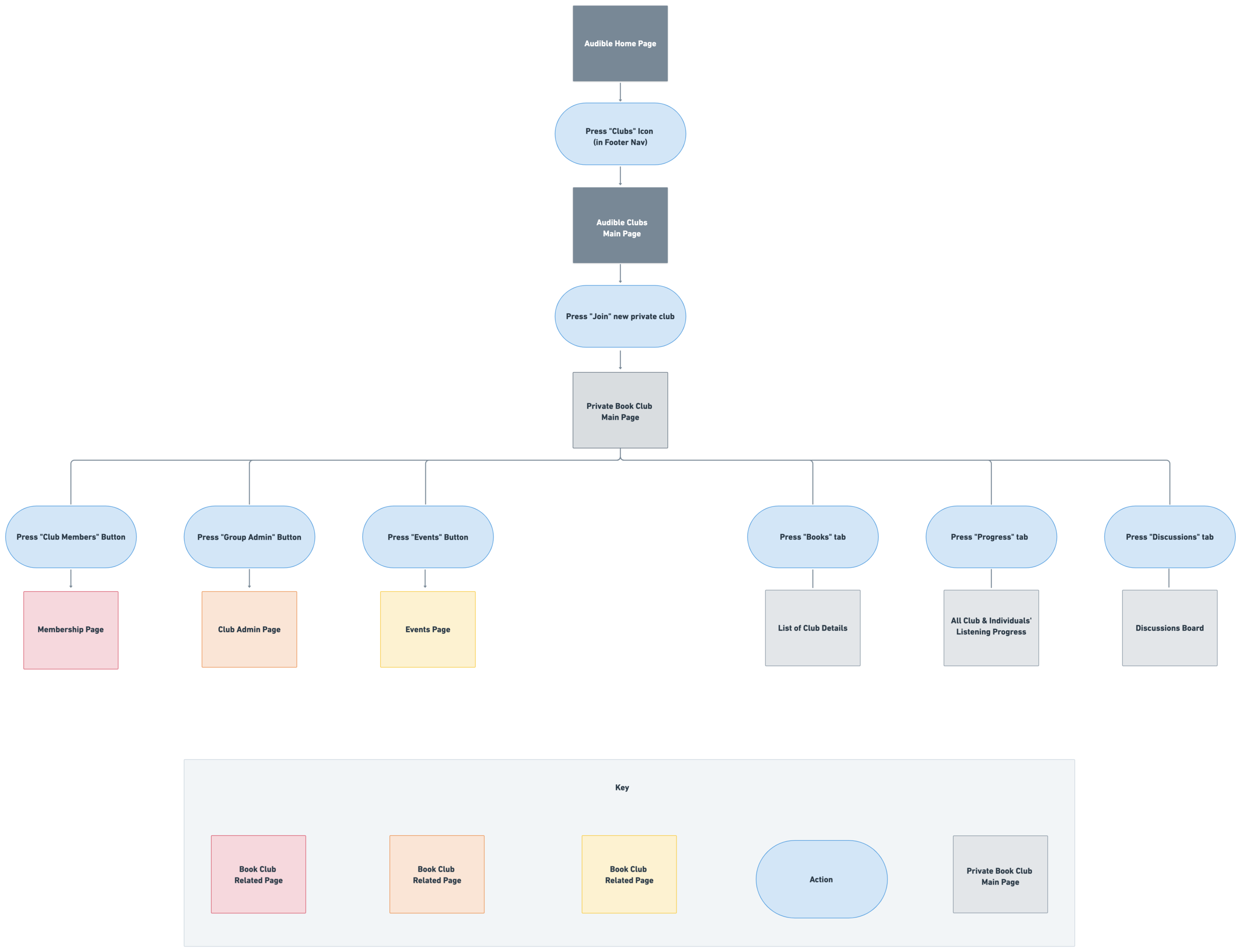
Full Feature Flow

Competitive and Indirect

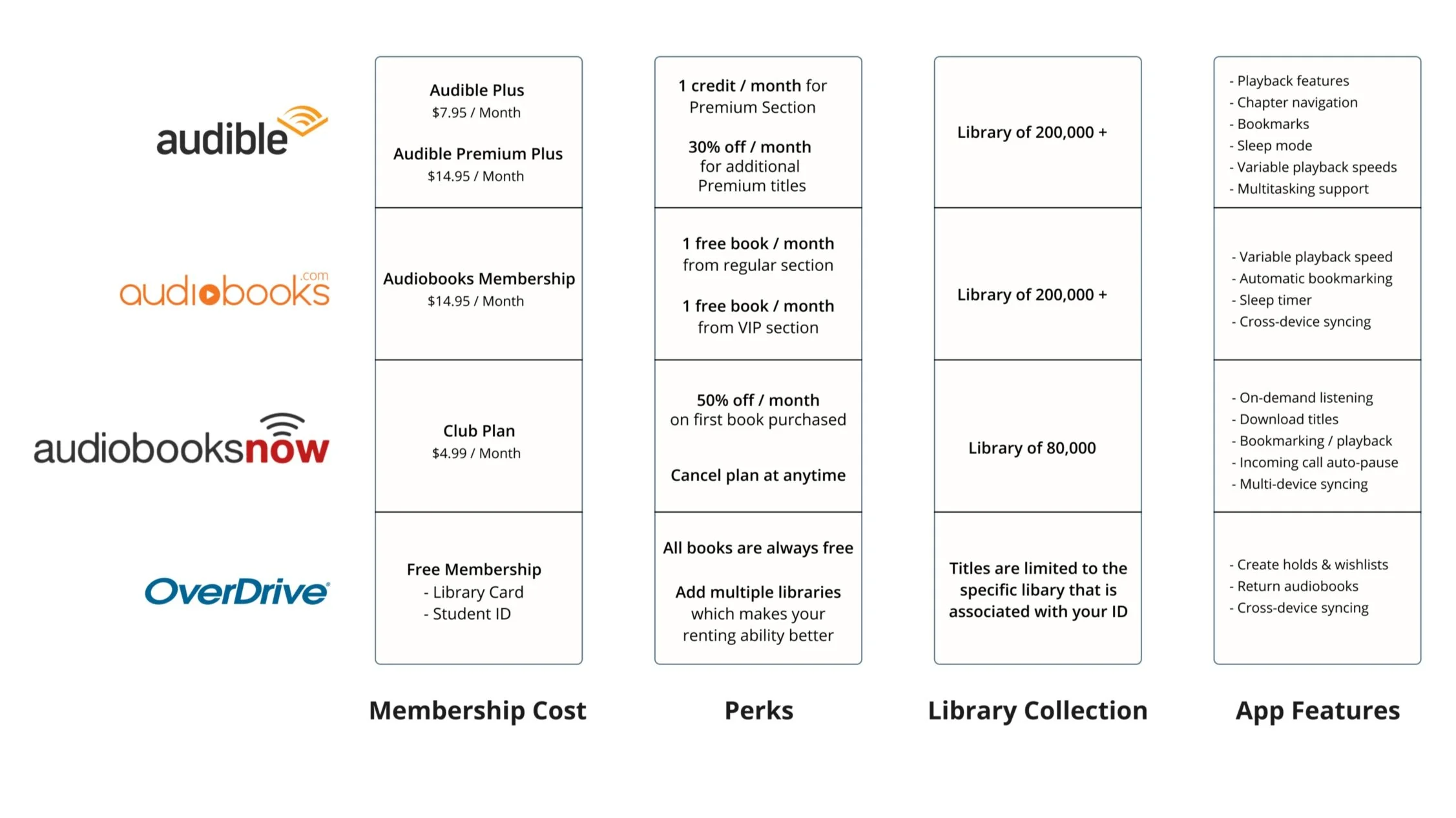
  • Competitive analysis of Audible's top 3 direct competitors: Audiobooks, AudiobooksNow, and OverDrive
  • All competitors offer similar library sizes and feature sets. Audible's advantage is its Amazon scale and online presence.
  • Researched indirect markets (health and fitness apps) to find social feature patterns outside the audiobook category
  • Strava and WHOOP emerged as strong references for community screens, member profiles, and event flows
  • Conducted user interviews with 9 Audible users ages 20 to 60

Since Audible would be first to introduce this kind of social feature, I had to look outside direct competitors. Strava and WHOOP both incorporate social elements while keeping their core focus on individual progress. They informed the UX and UI of the Members, Progress, and Events screens.

Not Enough to Share

Participants share books occasionally by sending screenshots, but rarely because there is no convenient in-app way to do so. They expressed that they would love an easier path.

Social is Missing

Across all 9 interviews, a social and sharing aspect was identified as the biggest gap in the Audible experience. Users enjoy the app but it does not fully meet their wants.

Loyalty is at Risk

Although competitors are unlikely to surpass Audible in scale, they could attract users through new features. Being proactive about unmet user needs is critical to protecting loyalty.

Competitive Analysis Audible competitive analysis chart

Feature Flow and Wireframes

Based on interview findings, I decided to create a Book Clubs feature that gives users a more social experience, allowing them to connect with fellow listeners without making Audible a full social network.

Key insights

  • Users want to share what they are currently listening to, what they have read, and what they plan to read
  • Virtual events for group discussions are a high-priority request
  • The feature must feel native to Audible's existing UI, not like a social media add-on
Book Club Feature Flow Book Clubs feature flow chart
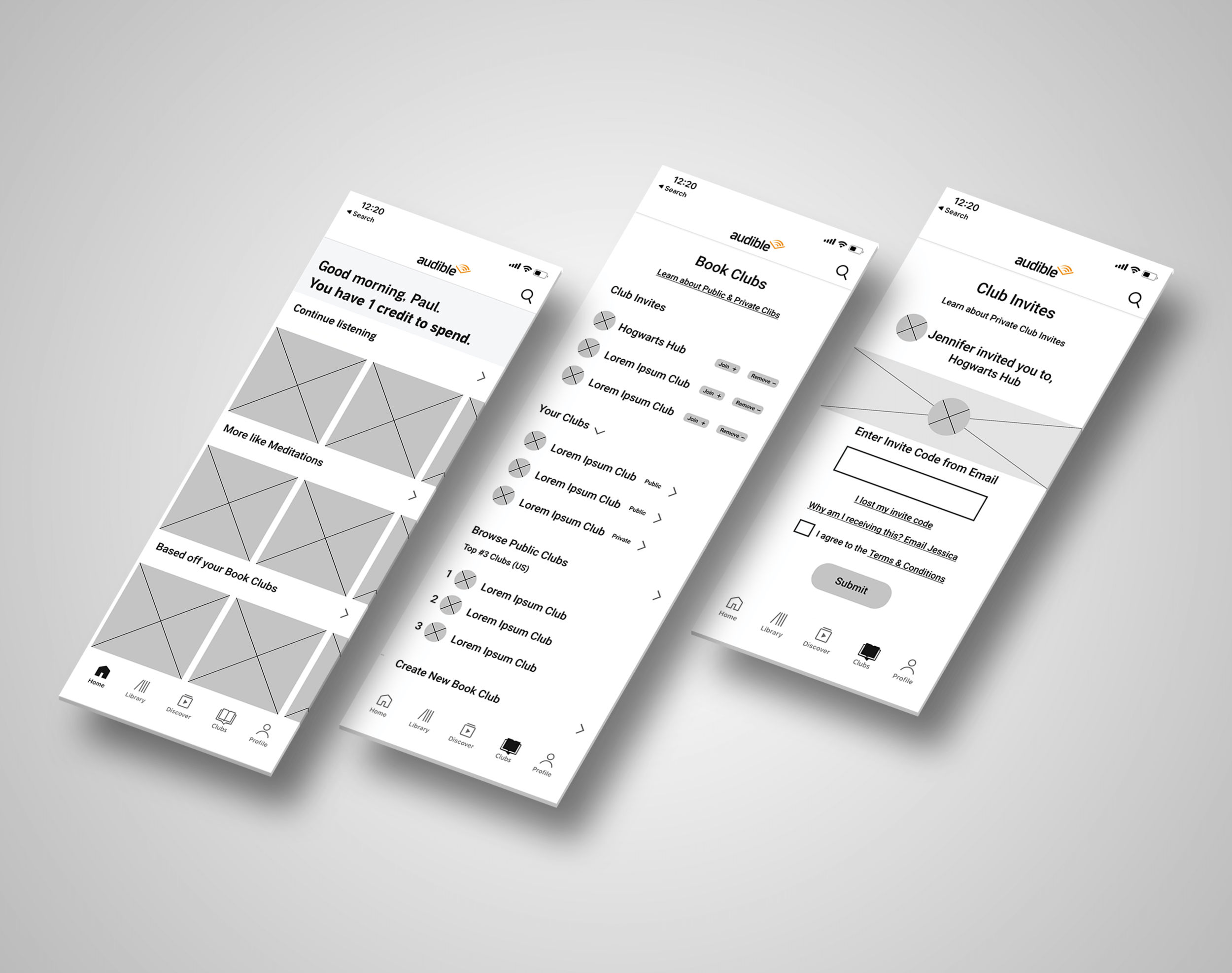
Club Invite Flow Audible Main Page to Clubs Main Page to Invite Page wireframe flow
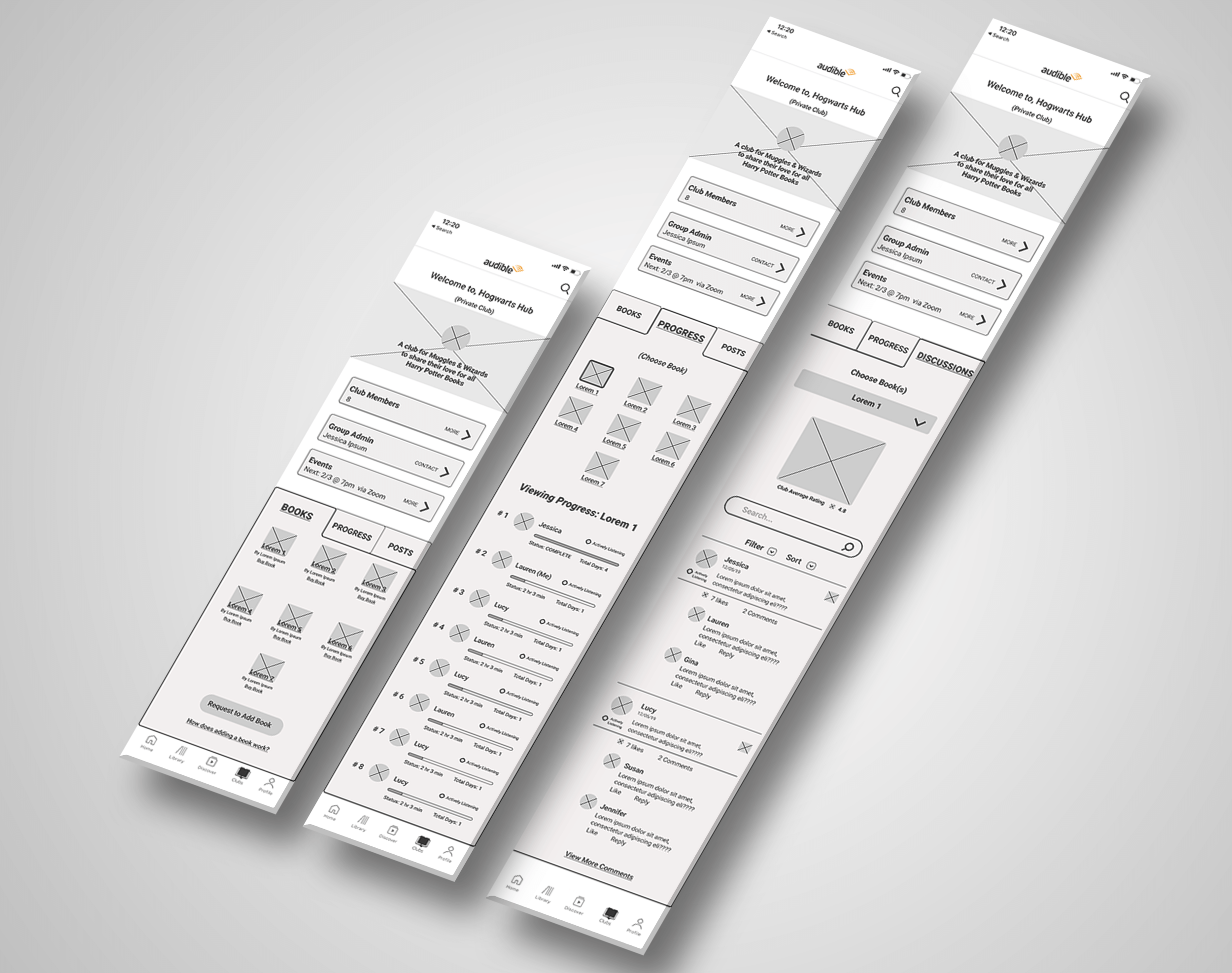
Books, Progress and Discussions Private Club Main Page with Books, Progress, and Discussions tabs
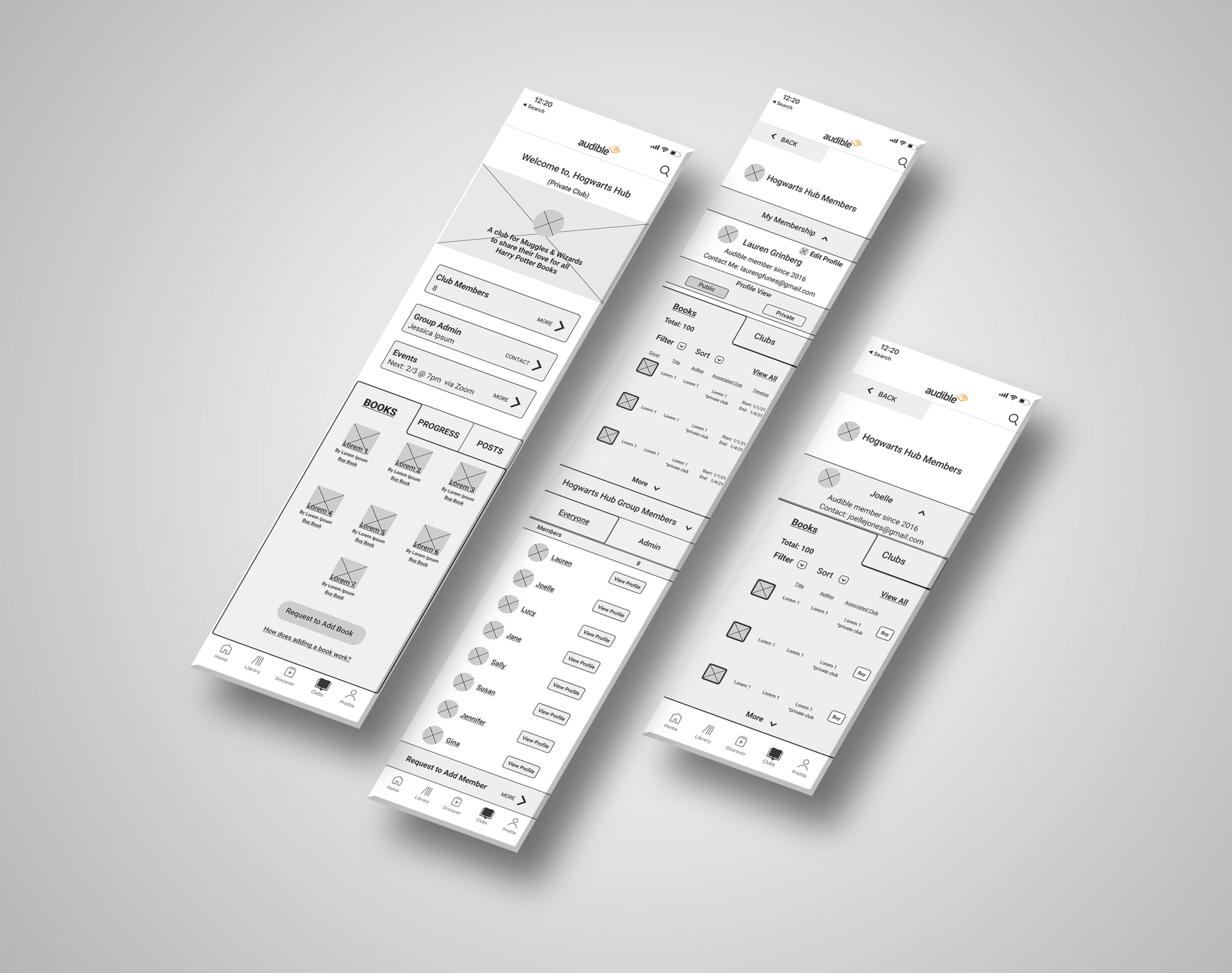
Club Members Page Club Members page wireframe
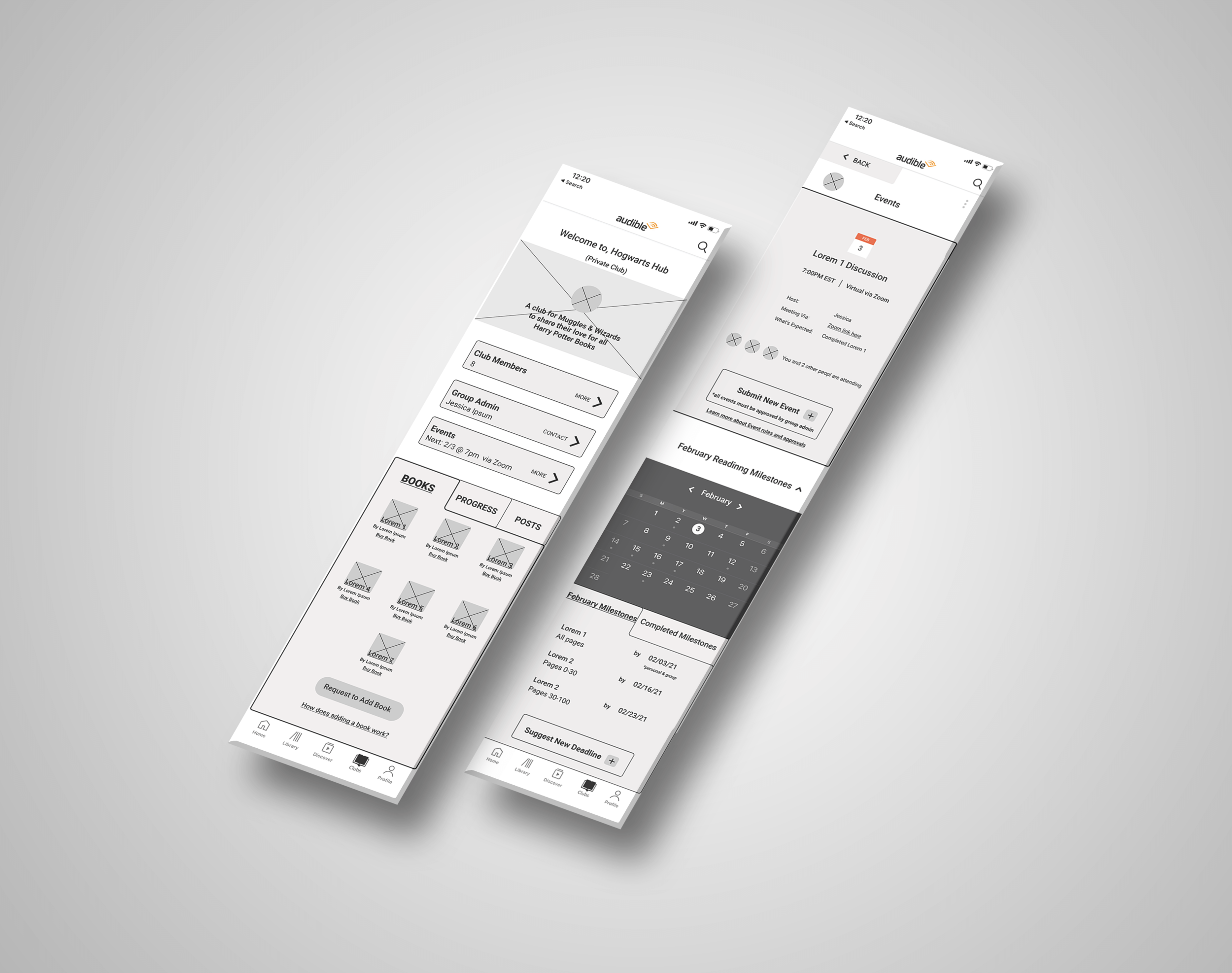
Events Page Club Main Page to Events Page wireframe flow

Usability Testing Iterations

A low-fidelity prototype was tested with 3 participants (ages 25 to 40). Their feedback drove two key changes before moving to high-fidelity.

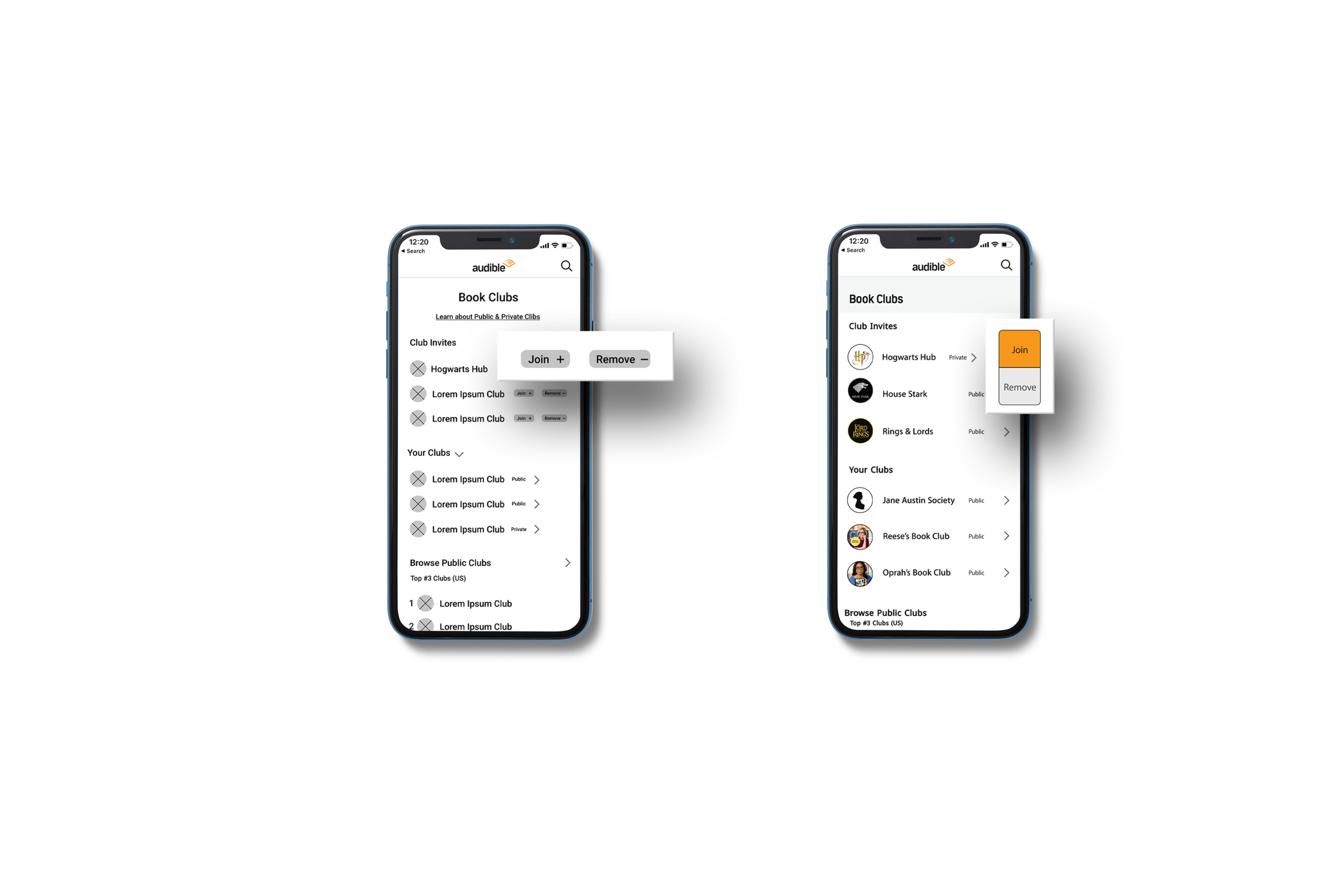
Iteration — Club Main Page Book Club Main Page before and after: replaced Join+ and Remove+ buttons with swipe gesture
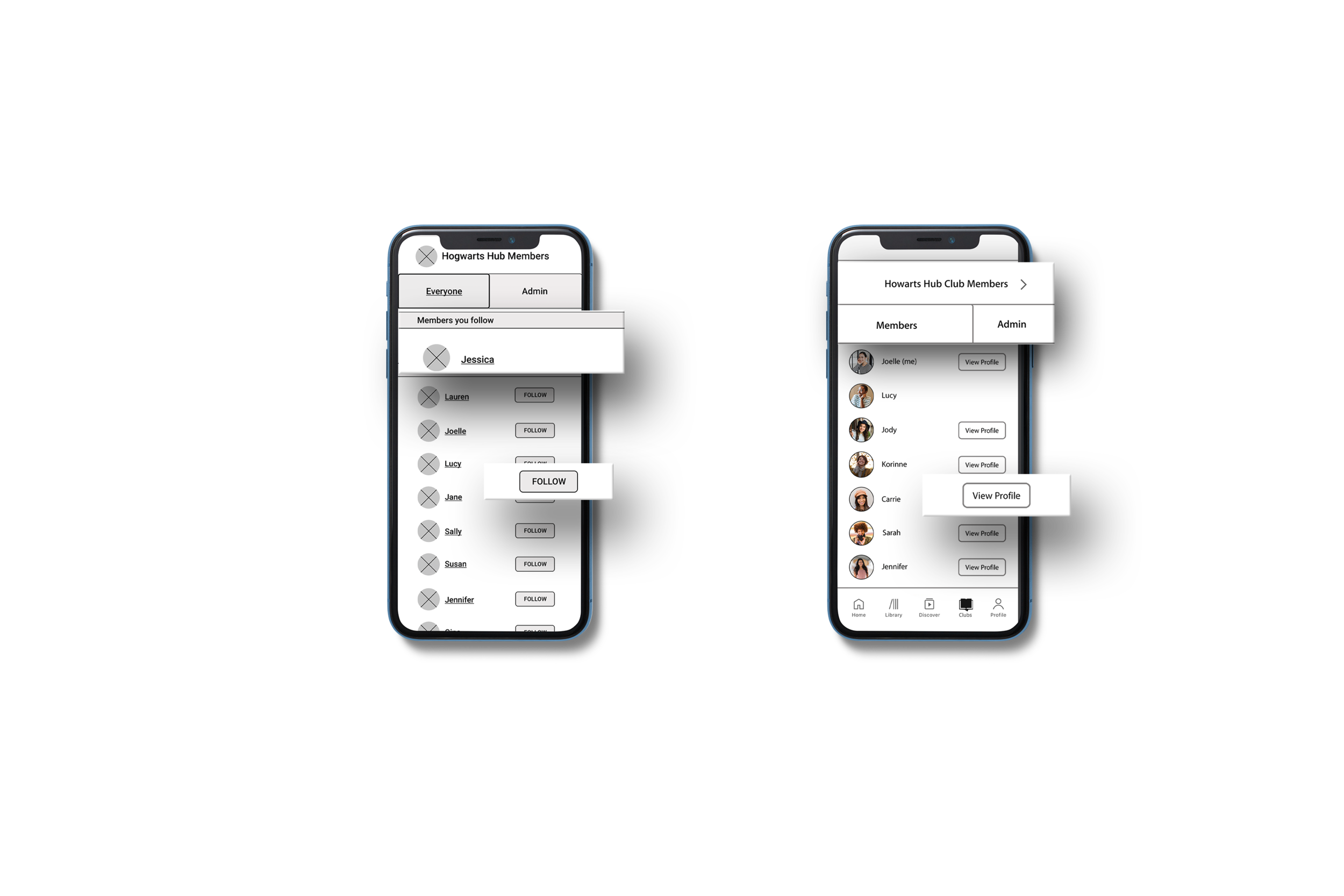
Iteration — Club Members Page Club Members Page before and after: removed Follow option, added View Member button

UI Kit and Final Flows

UI Consistency

Audible has a fully formed UI kit that is not publicly available. I recreated it in Figma as accurately as possible, matching the color palette, button styles, alignment, and typography so the new feature feels native to the existing app.

Final Prototype

With UI and UX fully developed, I designed 5 flows (12 total screens) for the high-fidelity prototype. Each flow represents a specific real-life situation that guides users through the Book Clubs feature.

Final Feature Flows

Club Invite
Members
Progress
Discussion

GoodReads Killer

All 6 usability test participants navigated the feature with ease, describing the UX as intuitive and the UI as consistent with Audible's current design. No one needed prompting to understand any of the flows.

The most telling finding: all 3 current Audible users mentioned, unprompted, that if Audible actually launched Book Clubs they would no longer need their GoodReads accounts. Two of the 3 non-Audible users said the feature might be enough to make them switch from GoodReads to Audible entirely.

Next steps would include creating additional flows for public clubs, adding form functionality to submit buttons within the private club flows, and conducting another round of usability testing to refine based on feedback.